

-
Students help remove the wax caps from the frames of honey using a special rolling tool (and forks) to pierce the protective layer.

-
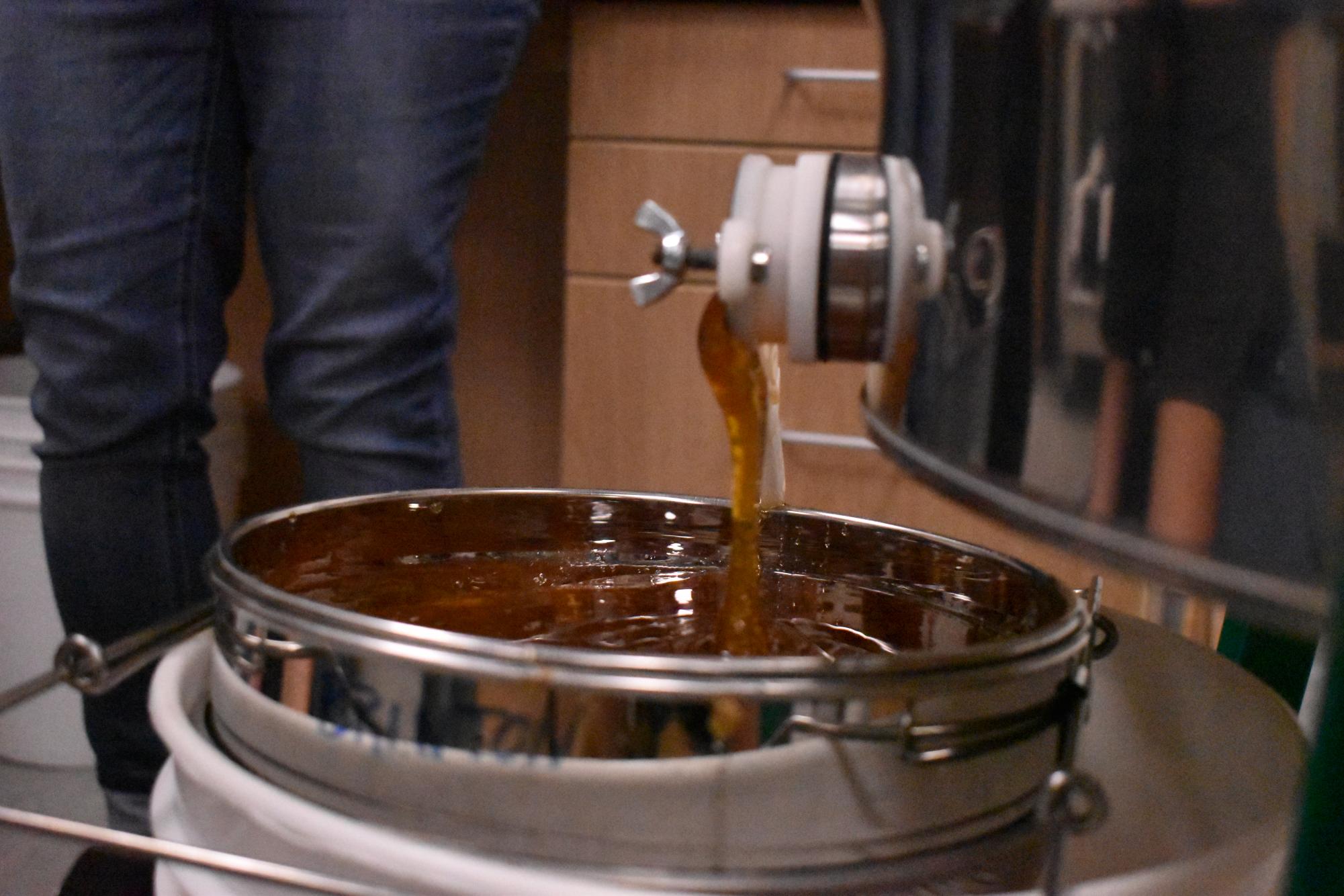
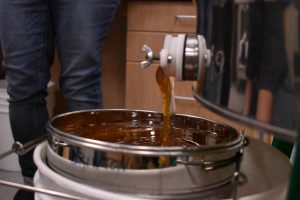
Honey drips from the centrifuge into a bucket.
-
Sarah Beth Waller enjoys a bite of honeycomb.

-
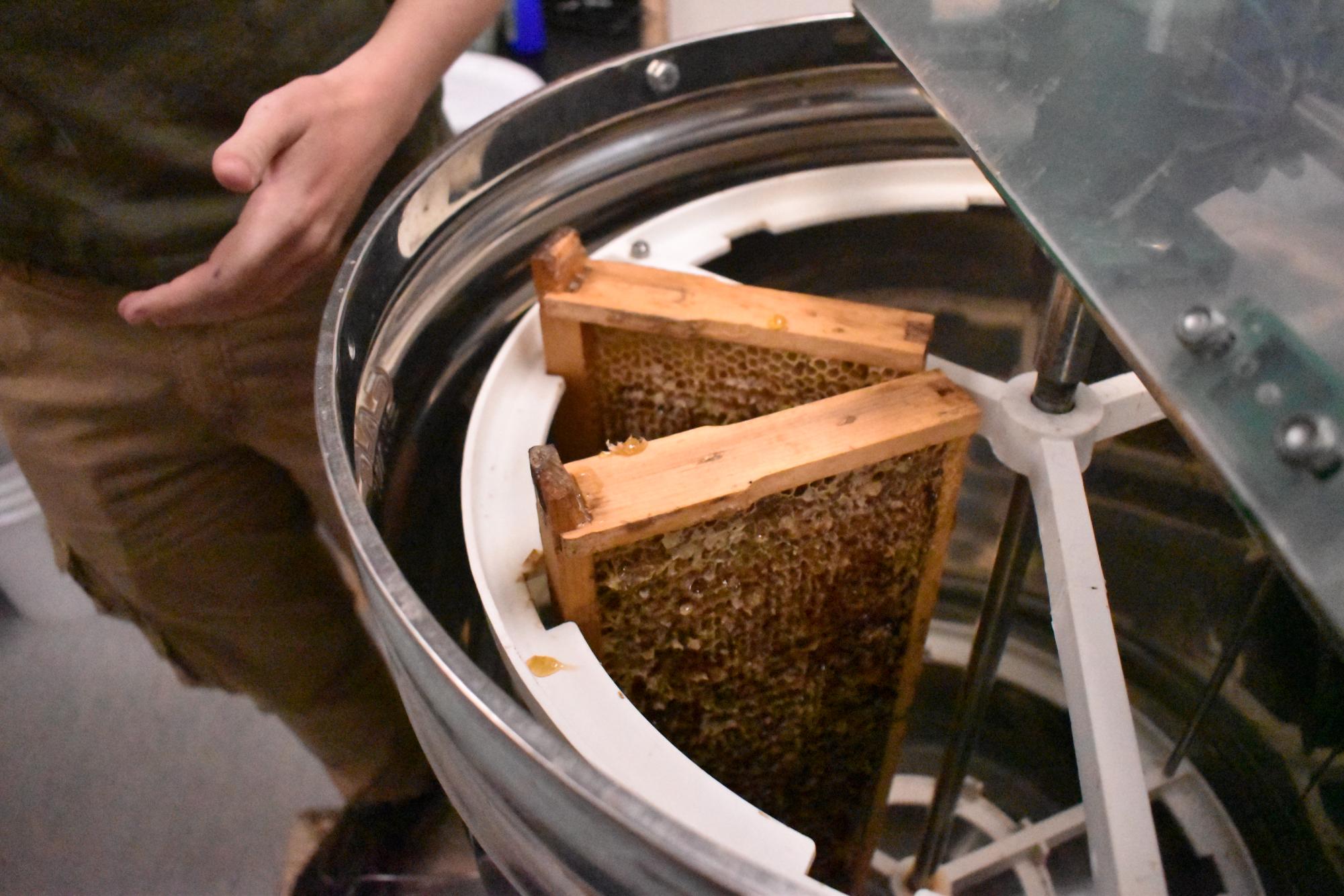
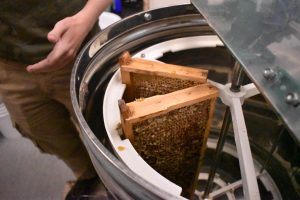
Loading the frames into the centrifuge.

-
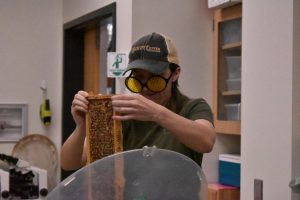
Frames are ready to be spun, extracting the honey.
-
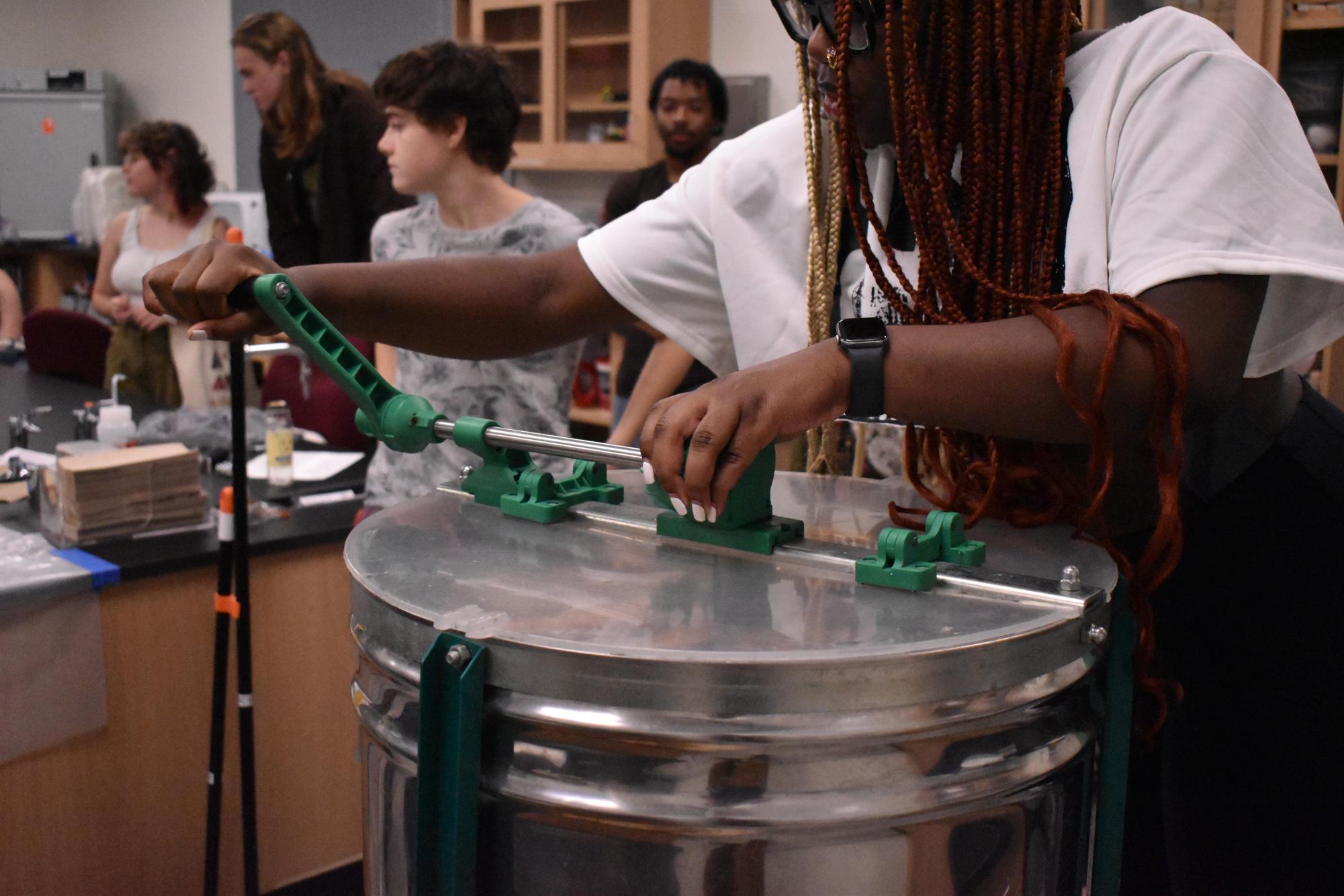
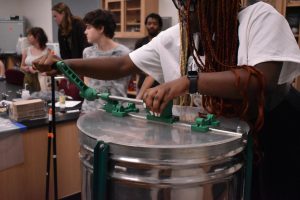
A student spins the handle, turning the inner barrel of the centrifuge to extract the honey.


Last Friday, Sept. 5, students joined the Armstrong Eco Advocates for the Honey Harvest, where they helped process honey from the campus beehive and learned how wild nectar is transformed into a sweet, golden treat.
Our Campus Hive

The beehives were introduced to their home near Armstrong’s Sustainable Aquaponics Research Center greenhouse in the spring of 2024. Students and professors involved with the Eco Advocates tend to the hives throughout the year, promoting the health and biodiversity of campus flora by nurturing these pollinators.
Biology student and certified beekeeper Sarah Beth Waller leads the hive’s maintenance. During the Honey Harvest, she described how bees make honey and walked other students through the process of collecting it.
“When the honeybees actually get nectar from flowers, they slurp it up and store it in this non-digestive pouch in their stomach called a honey crop,” Waller said. “Then they go back to the hive, and they’ll go to another bee, and they’ll swap the nectar and spit back and forth … that’s called trophallaxis.”
By regurgitating the nectar, mixing it with their stomach enzymes, and then fanning it with their wings, the bees reduce the water content of the honey down to about 17 percent. This low moisture content makes it possible for the honey to be stored for months or years, providing nutrients for the colony during winter.
Antimicrobial properties like low hydration and small amounts of hydrogen peroxide present in the honey ensure safe consumption for humans, and make for a relatively simple extraction and handling process.
Retrieving the Honey
“I went into the hives and I pulled the biggest frames of honey that they had,” Waller said, noting that some is left behind for the bees as well.
“You think it’s a fancy process, but you’re literally just pulling the frame of honey out of the hive, shaking all the bees off and running it to your car and throwing it in there, so the bees don’t follow you.”
Waller said that she does not get stung that often because bees aren’t too angered when you take their honey. But if you take their queen or accidentally squash another bee…
“They’ll release an alarm pheromone,” Waller said. “When I kill that one bee, it tells the other bees that I’m a threat.”
When working with the hives, Waller opts to wear just a protective veil and no gloves, so she can feel when she might be squashing a bee.
Extracting the Honey
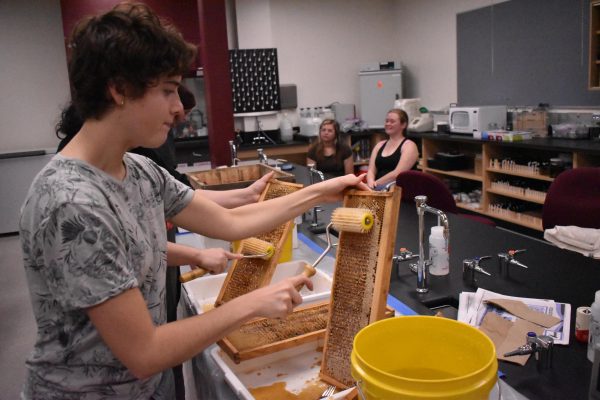
After collecting the frames, they were brought into the science center where uncapping tools, a centrifuge and a bucket were set up for collection. Dozens of students helped remove the thin layer of wax encapsulating the honey and loaded the frames into the spinning apparatus.
It is preferable to spin the honey out this way rather than scraping and smashing the combs because it takes a lot of effort for the bees to create these structures. When left intact, the bees will use these combs to store their honey the next summer.
As the last bits of honey were spun out of the frames, it was strained into a bucket below the centrifuge. Soon it will be bottled and sold, with profits supporting the Eco Advocates’ maintenance of the campus garden and hive.
Importance of Bees and Armstrong’s Campus Garden
A single worker bee may produce only one-twelfth of a teaspoon of honey during its few weeks of life in the spring and summer. When enjoying a spoonful of honey in a cup of tea, one is savoring the efforts of an entire colony.
More than making an enjoyable treat, though, bees play one of the most important biological roles on Earth, pollinating more than 75 percent of all flowering plants. They are indispensable to the growth of wild plants and the crops we eat. The introduction of the beehives last year marked another step in Georgia Southern’s initiative to promote sustainable practices and support biodiversity.
Dozens of students joined the Eco Advocates for the Honey Harvest, highlighting the interest and efforts of student conservation projects on the Armstrong campus. Waller recalls only a handful of students joining garden meetings last semester, but is now hopeful that participation will continue to increase.
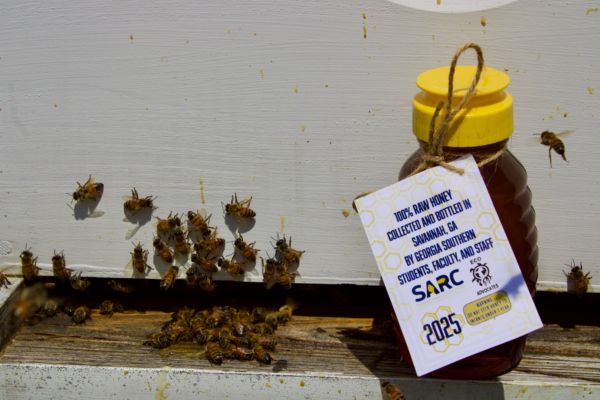
The Eco Advocates Honey Sale will be held on Friday, Sept. 26, from 11 a.m. to 1 p.m. at the International Gardens. Honey will be sold for $12 per eight-ounce jar. Students are encouraged to join the Armstrong Eco Advocates GroupMe to stay up to date on garden meeting dates and future events like the Honey Harvest.