


There’s a common picture people imagine when they think of a college student: 18 years old, straight out of high school, figuring life out one class at a time. But for many students, that timeline doesn’t exist — and never did.
At Georgia Southern University, students like Courtney Booker and Kylie Crane show that there’s no single “right” way to earn a degree.
Courtney Booker, a 41-year-old sport management major, didn’t take a direct path to graduation.
“It was 21 years from when I started college to when I came back,” she said. “I decided to dedicate so much of my life to being fully present for my kids.”
While Booker’s path included stepping away, Crane took a completely different route.
Kylie Crane, a 24-year-old biology major, chose the military as her next step, and her decision came from necessity.
“I actually enlisted in my junior year of high school,” she said. “I didn’t really have any way to fund a college education, and honestly, I just needed to get away.”
Their Journey before Coming to Georgia Southern
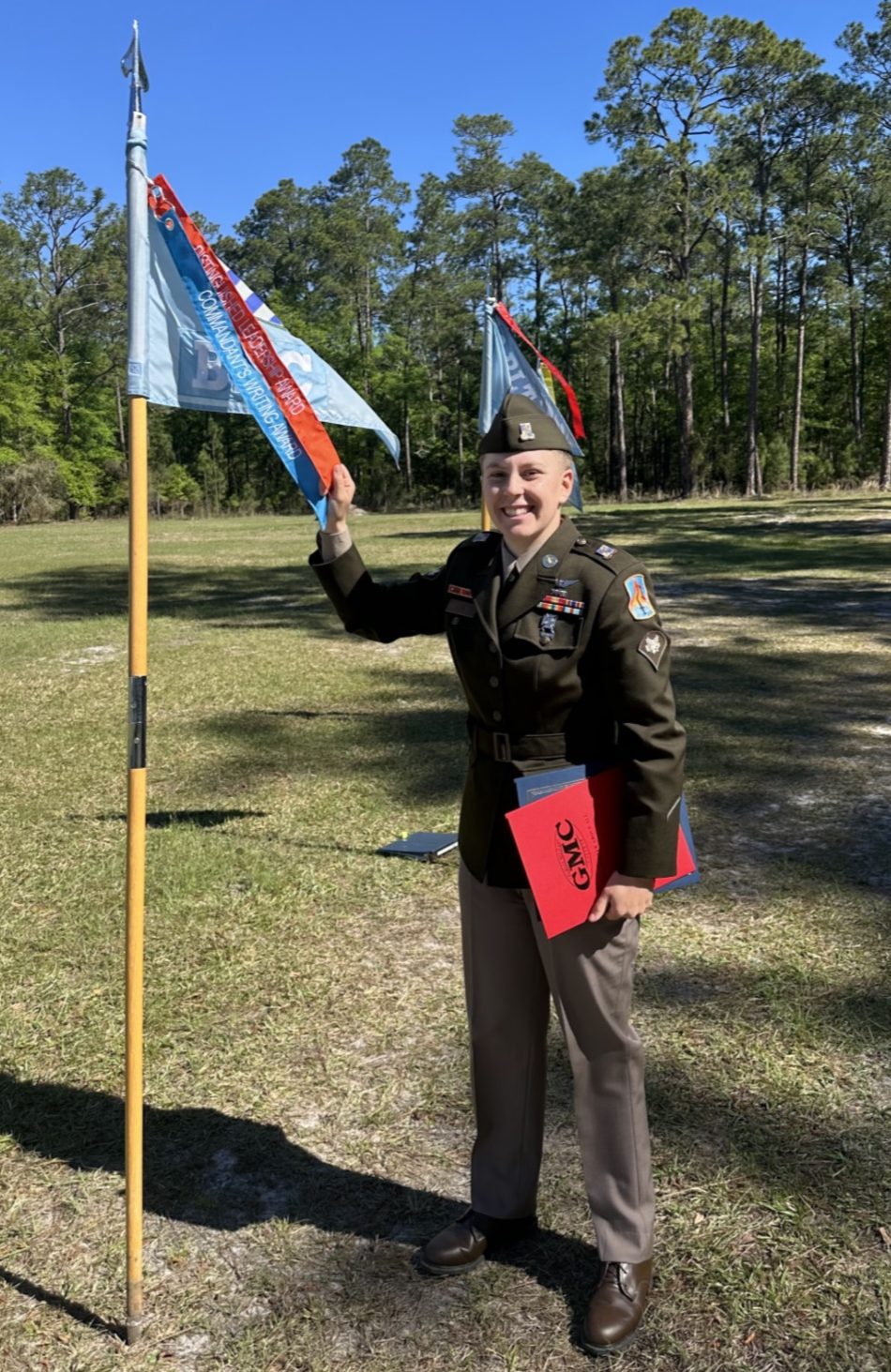
During her six years in the Army, Crane earned an Associates on Applied Science on Manned Aerial Vehicle Operation, became a sergeant, and gained life experience that shaped her perspective.
“The army, it was the best thing for me,” she said. “ It’s not for everyone, but it saved my life.”
Her military experience also taught resilience.
“I wouldn’t be as mature going into this degree as if I just went out of high school; you just learn to persevere,” Crane said. “I had some time to work on myself, and I think that made me a better student.”
-
Kylie Crane after her Basic Leadership Graduation where she won multiple awards, standing next to a Guidon flag.
-
Courtney Booker working as a Teller at Wells Fargo in 2011.


For Booker, stepping away from school didn’t set her back — it shaped her.
After starting school in the early 2000s, Booker stepped away for her kids before finishing her degree. She worked in banking for nearly a decade and later spent years as a fitness instructor.
“Two and a half, three years ago, I started thinking, what was life going to look like after they didn’t need me 100% of the time,” she said. “Determining what my passions were, I figured out, supporting women in sports, elevating their voices, it’s what made me come back.”
What they Learned and their Goals
Now preparing to graduate, Booker has returned with a clear sense of purpose.
“I would love to open Savannah’s first ever women’s sports bar,” Booker said, adding that she hopes to “become that advocate and that voice, especially for young girls.”
For Crane, academic life has allowed her to slow down.
“I do think the change will stay with me, the change in pace, the change in mindset, because I have had a little bit of a hard time transitioning,” she said. “Going to school is helping me a lot, because it’s giving me something to focus on and the ability to kind of sit and think about something before reacting.”
Booker said, “It doesn’t necessarily matter if you’re the smartest person in the room. What matters is if you care. Caring is the most important skill that I’ve learned.”
Despite their different journeys, both students share a similar message: there is no one-size-fits-all path.
“Don’t let what you think you should be doing stop you from what you know you need to be doing,” Crane said. “Everyone’s life path looks really different.”
Booker agrees.
“Find ways to be the best at what you want to do,” she said. “It doesn’t matter what job you hold, as long as you do it to the best of your ability.”
Their Advice
“You know what’s right for you. And I mean, don’t be discouraged by the roadblocks, and just take in the scenery,” Crane said. “Wherever you’re at, whatever you’re doing, even if it sucks, even if you hate it, just take it in because you’re only there for a little bit. Nothing’s permanent, and just keep moving.
“You can look at situations and not necessarily hold on to the anger or hold on to the frustration or the anxiety and maybe look at it as funny,” Booker said. “Be the best you can be and laugh as much as you can.”
For students like them, success isn’t about following a timeline — it’s about finding your own path and sticking with it.