

-
Photos by executive board member DeSimas

-
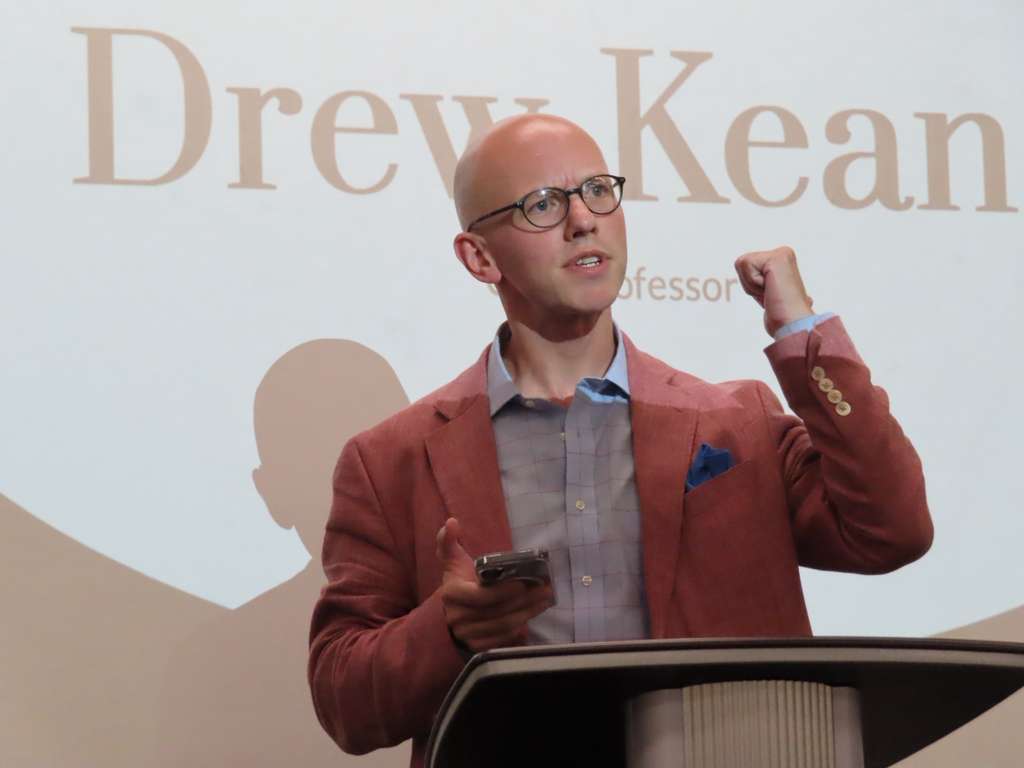
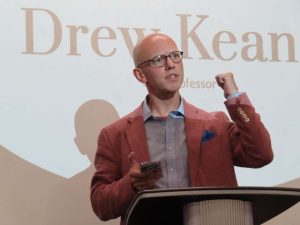
Speaker Drew Keane at the Teach-In event.
-
-
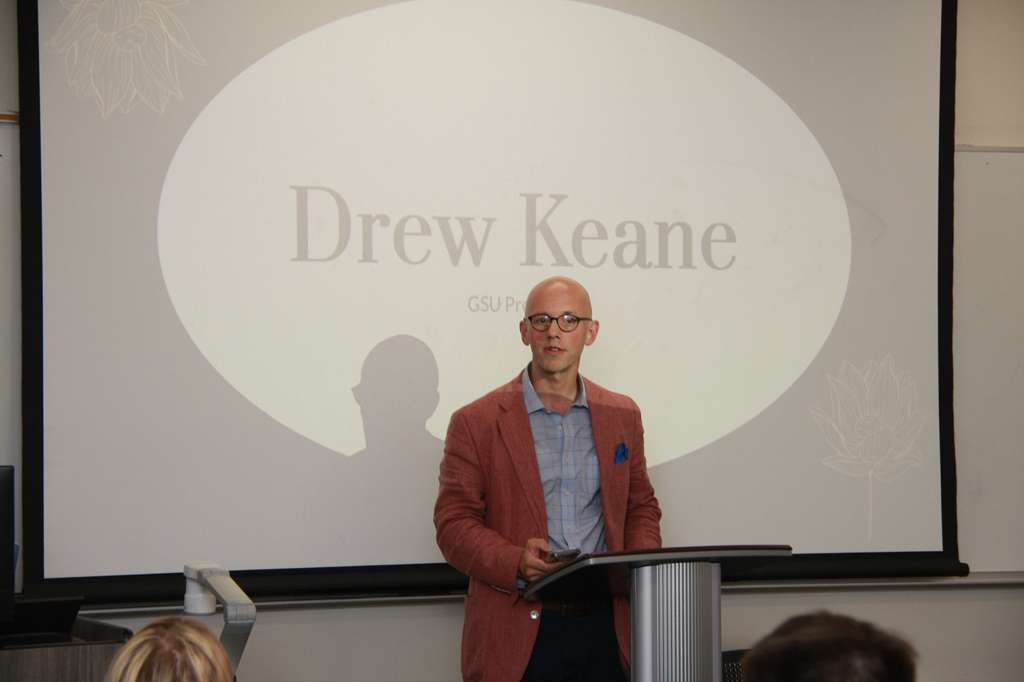
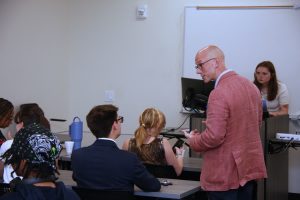
Students at the Teach-In, with Professor Drew Keane.
-
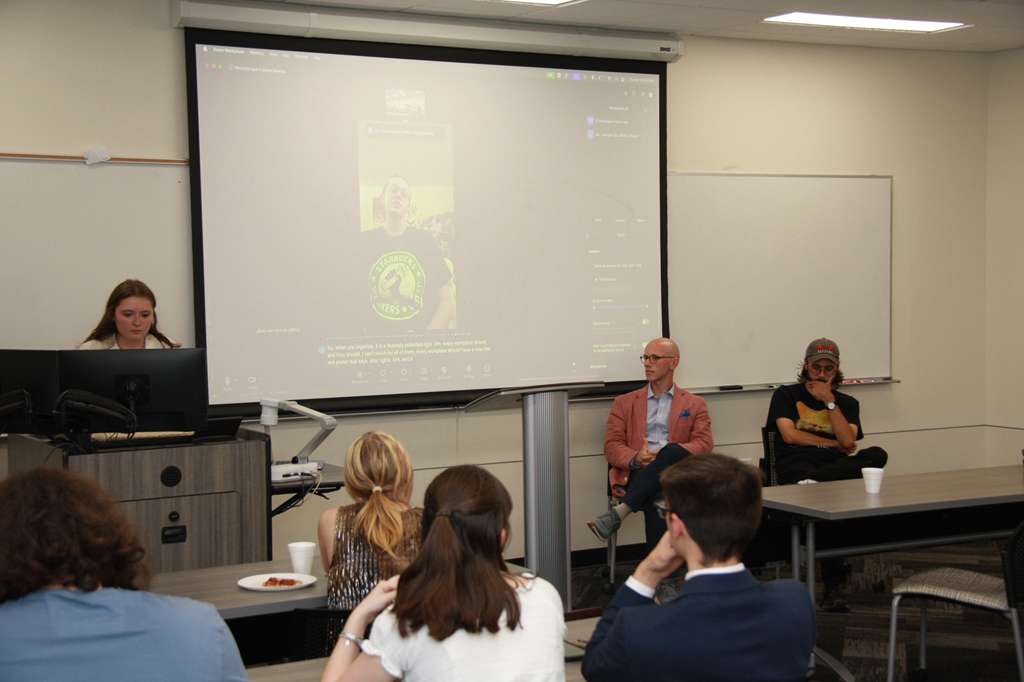
Students Against Starbucks and YDSA host a labor teach-in on the Statesboro campus.

-
Photos from the Teach-In, in the IAB building.
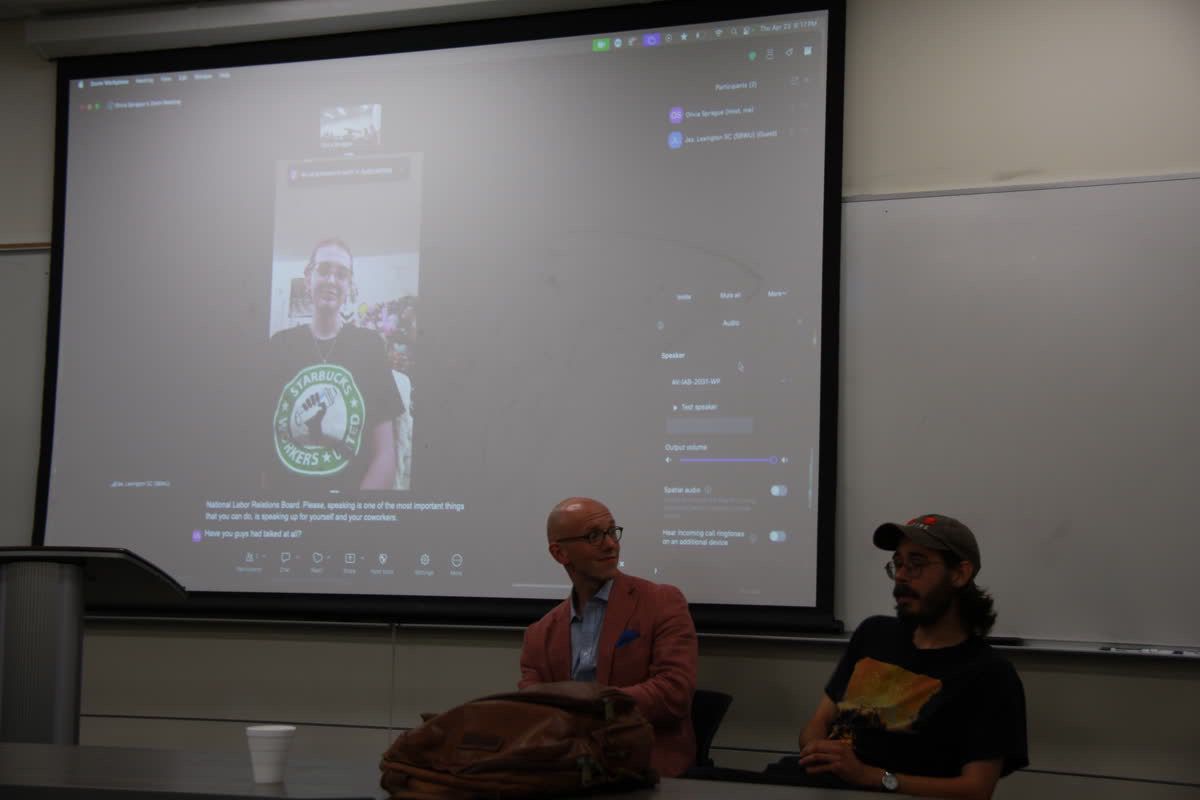
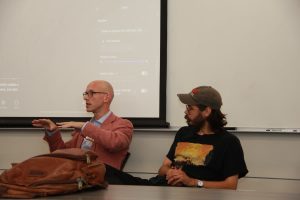


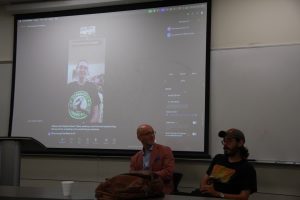
A group of student organizers is bringing national labor conversations directly to campus through a Starbucks Labor Teach-In, aiming to raise awareness, encourage dialogue, and mobilize student support around workers’ rights.
Hosted by members of the Students Against Starbucks and Young Democratic Socialists of America (YDSA) at Georgia Southern University, the event focused on what organizers describe as ongoing labor concerns involving Starbucks. According to student executive board members Olivia DeSimas, Olivia Sprague, Jasmine Satar, Sam Palermo, and Jack Reynolds, the teach-in was designed to educate students about labor practices and the importance of solidarity with workers.
For Reynolds, a junior political science major, the purpose of the teach-in was straightforward: “to bring awareness to our campaign against Starbucks’s illegal labor practices.” But what makes this effort especially significant, he explained, is its proximity to students’ everyday lives. “It was important to host this event on campus because our campaign is student-led and focuses on an on-campus institution.”
That immediacy, organizing around a place students recognize and interact with, makes the issue harder to ignore. And for organizers, that’s the point.
The event was supported in part by Students Against Starbucks, a national campaign affiliated with Starbucks Workers United. According to Palermo, the collaboration has been key in helping the group build structure and momentum. “Students Against Starbucks has been very helpful in helping us get the campaign started and organizing this event,” he says.
Still, the teach-in wasn’t just about one sole company. It opened up broader conversations about labor, power, and who gets a voice in the workplace.
DeSimas emphasized that student involvement can strengthen labor movements, but only when it’s done thoughtfully. “Students are often able to bring visibility and public pressure to labor issues, particularly on campuses,” she says. “At the same time, their impact is strongest when they work in solidarity with workers rather than trying to lead for them.”
That idea of solidarity showed up throughout the discussion, especially when addressing common misconceptions about service jobs. Palermo pushed back against the assumption that entry-level work doesn’t deserve serious attention.
“People often believe that because working as a barista is viewed as an entry-level job, they don’t deserve a livable wage,” he said. “Any worker, no matter experience level or job prestige, deserves to make a livable wage when they work full-time.”
It’s a perspective that challenges how students, and society more broadly, value labor. And it ties into a larger movement happening across industries, where workers in historically non-unionized spaces are beginning to organize
Reynolds connected the teach-in to that bigger picture. By focusing on service-industry workers, he said, these types of events show how labor movements are expanding into areas that have long been overlooked and hidden in a dark corner.
For many students, this topic can still feel distant or irrelevant. That’s something organizers are actively trying to change.
“Even if students aren’t familiar with labor issues, they’re already affected by them,” DeSimas said. “Through jobs, internships, and their future careers, understanding workers’ rights helps them recognize unfair treatment and advocate for themselves.”
That message feels especially relevant on a college campus, where many students are entering the workforce for the first time.
As for what comes next, the group isn’t slowing down. They are currently collecting signatures for a petition and waiting for a response from university administration. If that response doesn’t come, Palermo made it clear they are prepared to keep pushing.
“We will take measures to ensure that the administration knows that we will not be ignored,” he said.
They point to similar movements at universities like University of California, Los Angeles, Cornell University, and Pomona College as proof that student-led campaigns can create real change, an example the group hopes to follow as they continue building momentum on campus.
Their efforts reflect a level of organization and commitment that’s already making an impact, showing how student voices can push important conversations forward.
On this campus, at least, labor isn’t just an abstract issue anymore; it’s personal.
Learn more -> https://y.dsausa.org/