


Tucked away in a corner office in Gamble Hall, filled with books, graded and ungraded essay booklets, and enough books to fill at least fifty “little libraries,” sits Finbarr Curtis, Ph.D., at least on a few days of the week.
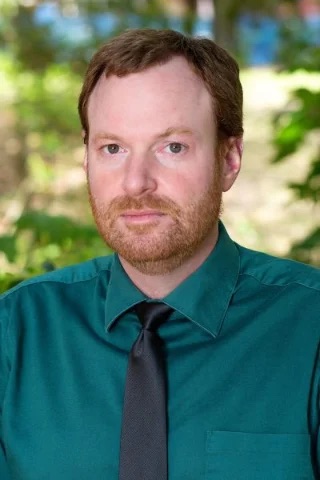
Curtis is a professor of religious studies in the Department of Philosophy and Religious Studies at Georgia Southern University, with offices in both Armstrong and Statesboro. Although he may not be a mainstay on our campus, his classes are well-regarded by students. During our brief interview together, he explained to me the struggles within his department, new developments on Armstrong, and the goals of his teaching.
Curtis has been with Georgia Southern since 2013, before the Armstrong campus was even consolidated, and after only eleven years, he became a full professor. In his time here, the classes under Religious Studies have changed significantly, as Curtis explained,
“At first, we couldn’t even fill an entire class roster.”
Nowadays, however, almost every class has a healthy number of students from almost every major you could think of. Even with the number of students in the Fall and Spring semesters at a healthy amount, Summer classes are a different issue.
“I’m teaching an in-person Summer class, Intro to Religious Studies, and it’s hard to get students to come… students don’t even know where to look.” Curtis then went on to mention that he would like to see more in-person summer classes, but the lack of attendance is a hard issue to get over, especially with the recent trend of budget cuts that may make expenses like this harder to justify. Not everything in the department is doom and gloom; new classes are getting added to schedules, and old ones are being brought back around, such as Biblical Studies:
“We had a Professor who taught Biblical Studies in the past, but we eventually lost that professor and had nobody to teach the class, at least until this past year.”
Some may be asking what the difference is between Theology and Religious Studies, and Curtis offers his distinction between the two: “[Religious Studies] is different from Theology in that it offers no teachings of a specific religious truth, and instead provides understanding of various religions.” Curtis also explained how one of his goals, when teaching, is to “help students develop critical evaluation skills … precision in evaluating concepts and categories.”
If you had to take one class from Curtis, he would certainly suggest any of his upper-division classes, but at least for the upcoming fall semester, not much is happening at Armstrong in Curtis’ world: “I don’t have any plans for teaching a class at Armstrong in the Fall, I have class in Statesboro, but in the Spring? We’ll see, it’s not planned out yet.” Even so, he’s still teaching his in-person Summer class, Intro to Religious Studies, and if seeing more in-person classes on the registration list interests you, the best way to ensure more on the way is to attend!