

A year ago, I wrote two pieces about Immigration and Customs Enforcement, one incorporating a professional view from an immigration attorney and another from my perspective as a Honduran studying in the U.S. In the first piece, Dr. Maureen Stobb, a political science professor and former immigration attorney, explained the complexity of U.S. immigration law, emphasizing the need for systemic reforms, employer accountability, and protections against racial profiling in workplaces.
However, the implications of immigration enforcement clearly extend far beyond workplaces.
Suspicion has seeped into everyday spaces, grocery stores, shopping centers, school hallways, and even kindergarten classrooms, where appearance, accent, or a last name can quietly trigger scrutiny—and even violence. In my second piece, I focused on families and legal residents affected by aggressive enforcement measures, questioning whether policies justified in the name of security were beginning to erode fundamental principles of fairness and human dignity.
What began as a conversation framed around national security has gradually exposed a deeper issue: when entire communities feel targeted, the debate changes from border protection to belonging. Who belongs here and who does not? Lives are not abstract policy points; they are built around routines, aspirations, and contributions to the very communities now shadowed by fear. Political decisions filter into daily life, they do not remain in legislative chambers. Disengagement may feel easier, but its consequences do not disappear simply because they are ignored.
If division dominates the discourse, then empathy must shape the response.
~
This past year, immigration enforcement has intensified, and public reaction has grown increasingly visible. Operations have expanded nationwide, accompanied by sustained protests demanding oversight and reform.
Across the country, enforcement has not spared U.S. citizens or children.
In Minnesota, federal agents took 5‑year‑old Liam Conejo Ramos into custody alongside his father while he was returning home from preschool, a case that drew national outrage and legal pushback. Reports detail that officers directed the child to knock on his own family’s door to see if others were home, a tactic critics described as using a child as bait.
A mission framed as protection has enabled violence and quietly fractured the very communities it claims to defend. Earlier this year, Minneapolis became a focal point after a federal immigration agent shot and killed 37-year-old Renée Nicole Macklin Good during an ICE operation. The incident sparked demonstrations and renewed calls for accountability regarding federal enforcement practices. Across the country, critics have questioned the execution of these operations, while others continue to defend them as necessary. In this climate, statistics circulate rapidly, including totals of removals, detentions, and families affected, but numbers alone cannot capture the personal disruption behind each case. When enforcement becomes a presence in neighborhoods and public spaces, it alters how communities move, gather, and perceive their own safety.
More Than Music
Publishing this piece in today’s political climate is daunting, but writing it comes as naturally as putting pen to paper.
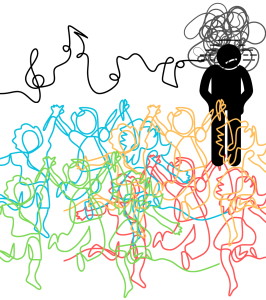
In the same political climate marked by heightened enforcement and public division, Bad Bunny stepped onto the Super Bowl stage and delivered a performance entirely in Spanish. It has become the most-watched halftime show in history, drawing more than 135 million viewers. Simultaneously, an alternative “All-American” halftime event organized by Turning Point USA protested what it framed as a cultural shift.
The contrast was telling.
While debates over immigration intensified, a global Puerto Rican artist used one of the largest platforms in American media to celebrate language, heritage, and identity without translation or concession. The performance was not confrontational; it was declarative. It did not diminish anyone else’s identity, but it refused to minimize its own.
In a moment defined by polarization, that choice resonated. Cultural pride, expressed so confidently and publicly, challenged the narrative that belonging must be earned through silence, assimilation, and blending in with the sheep pack. No Spanish class was needed to understand the message extended through Bad Bunny’s music. It underscored that identity is not a disruption to American life but part of its composition.
Hate relies on reaction and escalation. Love, by contrast, requires intention and endurance. Choosing love does not mean dismissing legitimate policy debates; it means approaching them without surrendering compassion. It means recognizing that strength is not demonstrated through exclusion but through the willingness to protect the dignity of others. The only force capable of countering division at its core is a commitment to shared humanity. In times when fear shapes headlines, that commitment becomes not only moral but necessary.
Meaningful change requires resisting divisiveness and choosing humanity over argument.


